

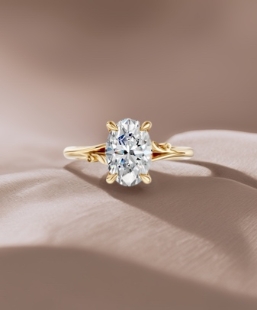
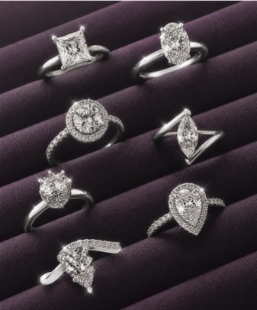
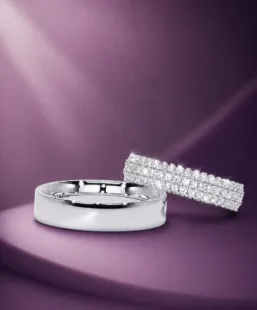
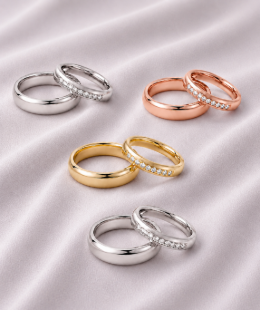
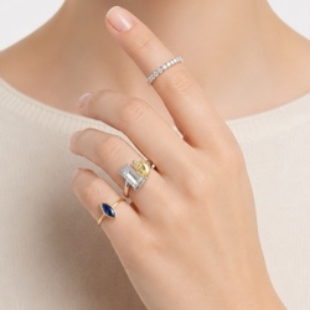
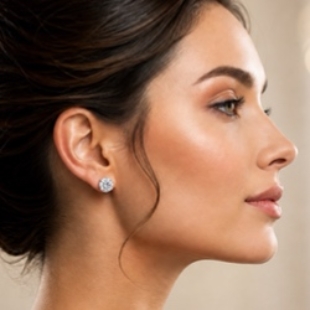
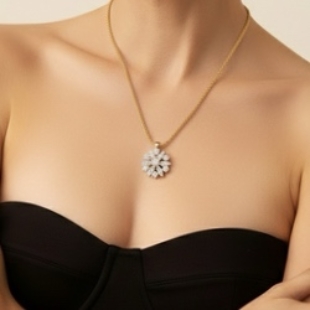

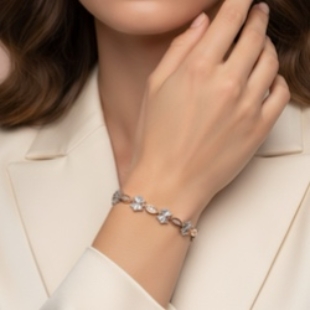
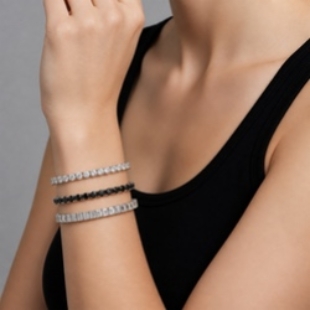
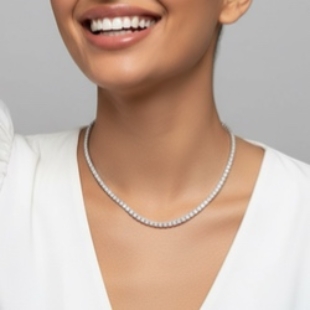
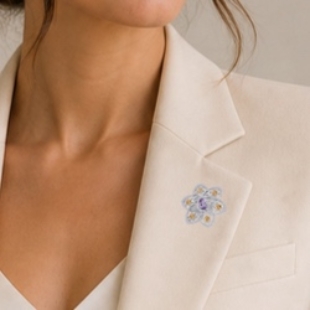
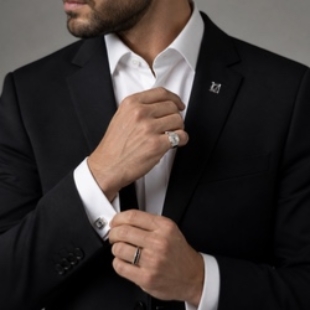
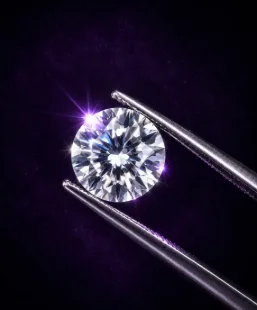
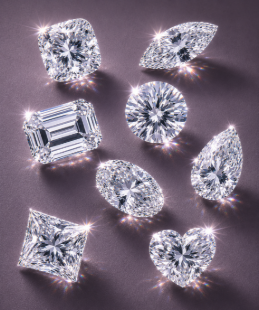
In Romania, the sale of jewellery set with diamonds and precious stones grows more substantial every year. Buyers are refining their tastes, while designers and workshops keep pace with ever more valuable and spectacular creations.
When you buy an engagement ring or a pair of wedding rings with natural diamonds, you don't make the purchase "by the gram". Nobody says: "Hello, I'd like to buy 3.75 grams of diamond ring, please".
18 kt gold is a premium precious metal with qualities far superior to costume jewellery, just as a natural diamond bears no comparison with a white stone (however pompously it may be dubbed "crystal") that has been produced synthetically.
We asked M. Constantinescu, CEO of Diamante.ro/FIRESQ, who would prefer synthetic diamonds in a piece of jewellery, and why:
"It's a matter of choice. Although we sell only internationally certified natural diamonds, we have nothing against technological progress, and therefore nothing against synthetic diamonds or other synthetically produced precious stones, as long as clients are properly informed. Unfortunately, the market is full of all sorts of synthetic substitutes with pompous names that mislead you, and those who do this clearly do so on purpose: hydrothermal emeralds or sapphires, diffusion sapphires or 'man-made' diamonds (notice that they have no names of their own, but instead 'latch onto' the name of the natural stone) are just a few examples."
Whoever prefers the "leftovers" chooses the synthetic
Since it is, after all, a matter of choice, it is good to know exactly how things stand. Historically speaking, the old alchemists spent centuries on end trying to turn lead into gold. Magic formulas, secret potions and... here we are, with modern science and today's advanced technology having brought us to the point where we have gold made from lead.
We asked the CEO of Diamante.ro to comment on this:
"I'm all for the advance of science, up to the point where, in all honesty, we have to say that this gold of the modern alchemists is called costume jewellery, just as modern alchemy has turned glass into crystal or carbon dust into diamond. That's the truth, and anyone who wishes to wear such a piece — in which the gold is not gold and the diamond is not a diamond — is entirely free to do so. There are, for example, synthetic stones made in a laboratory using the dust left over from polishing natural stones — it's rather like cobbling together a 'feast' from the food scraps left on the tables of the rich", says M. Constantinescu.
We have to admit that it isn't a very pleasant image, on the one hand, while on the other our modern person must have options and choose with full knowledge of the facts. And it isn't easy at all, because every day we are bombarded with hundreds of pieces of information from which we have to pick out "the truth".
The buyer of gold jewellery with natural diamonds belongs to a special category of people. And it isn't only about a certain financial status, an aspect not to be ignored, but also about a certain social upbringing.
"It's true that our clients have a certain financial strength, but this aspect becomes somewhat secondary when we're talking about natural versus synthetic stones. As a client, you simply need to know that the fascination of a piece of jewellery lies partly in the fact that a natural mineral has been polished and set in precious metal so as to transform, quite naturally, value into emotion. The internationally certified diamonds we set in our creations are backed by solid guarantees from the most prestigious gemological institutes in the world. Working only with natural precious stones set in 18kt gold, as we do, is already a promise fulfilled across our 24 years in business", says M. Constantinescu, CEO of Diamante.ro/FIRESQ.
Source Ziare.com: http://www.ziare.com/cultura/documentar/diamante-naturale-vs-sintetice-ce-trebuie-sa-stim-1490280


